Artificial insemination is now a routine part of modern pig breeding, but the method used to place semen can have a significant effect on breeding efficiency. For many farms, conventional artificial insemination remains the standard approach because it is simple, familiar, and relatively easy to perform. At the same time, deep insemination techniques have become more widely used because they allow semen to be placed closer to the uterus, making it possible to work with smaller semen doses in certain breeding programs.
So, what is the actual difference between deep insemination and conventional artificial insemination in sows? The answer is mainly related to where the semen is deposited, how much equipment is required, and how carefully the insemination procedure must be controlled.
How Conventional Artificial Insemination Works
In conventional artificial insemination, also called cervical artificial insemination, the insemination catheter is guided through the vagina and positioned in the cervix. The semen is then deposited into the cervical area and moves naturally through the reproductive tract.
This method has been used in commercial pig production for many years. It is relatively straightforward, and many farm workers are already familiar with the technique. Conventional artificial insemination is also less dependent on specialized equipment, which makes it practical for farms with a wide range of herd sizes.
A conventional insemination usually involves a larger semen volume and sperm dose compared with some low-dose breeding systems. Research has shown that conventional insemination can provide good reproductive performance when semen quality, timing, and sow management are all handled properly.
What Is Deep Insemination in Sows?
Deep insemination, often referred to as deep intrauterine insemination, takes the procedure a step further. Instead of depositing semen near the cervix, a specialized catheter is used to deliver the semen deeper into the reproductive tract, closer to the uterine horns.
This approach is designed to reduce the distance that sperm must travel before reaching the site of fertilization. Because the semen is placed closer to the uterus, deep insemination can allow the use of considerably fewer sperm cells in some breeding programs. Studies have reported successful reductions in sperm numbers while maintaining reproductive performance under appropriate conditions.
It is important, however, not to confuse deep intrauterine insemination with post-cervical artificial insemination. Post-cervical AI places semen beyond the cervix, generally in the uterine body, while deep intrauterine insemination goes farther into the uterus. These are related but technically different methods, and the equipment and handling requirements are not always the same.
The Main Difference: Where the Semen Is Deposited
The biggest difference between the two techniques is the location of semen deposition.
With conventional artificial insemination, semen is introduced at the cervix. The reproductive tract must then transport the sperm toward the uterus and the oviducts. With deep insemination, the semen is introduced farther into the uterus, reducing the distance sperm need to travel.
This does not automatically mean that deep insemination will produce better results in every herd. Reproductive success still depends on semen quality, ovulation timing, sow fertility, technician skill, hygiene, and overall herd management.
In fact, research on low-dose deep insemination has shown that results can vary depending on the protocol. Some studies have reported reproductive performance similar to conventional AI, while others have found reductions in litter size under certain low-dose conditions.
Semen Dose and Breeding Efficiency
One of the main reasons farms consider deep insemination is semen efficiency. Conventional artificial insemination traditionally uses a higher sperm dose, while post-cervical and deep intrauterine systems can reduce the number of sperm required per service.
This can be particularly valuable in genetic breeding programs where semen from a high-value boar is limited. Using fewer sperm per sow may allow a single collection to serve more animals, provided that semen quality and the reproductive protocol are carefully controlled.
However, reducing the sperm dose should not be treated as a simple way to cut breeding costs. The correct dose depends on the insemination method, semen quality, extender, storage conditions, timing, and the reproductive status of the sow. A lower dose that is poorly managed can negatively affect breeding results.
Equipment and Technician Skill
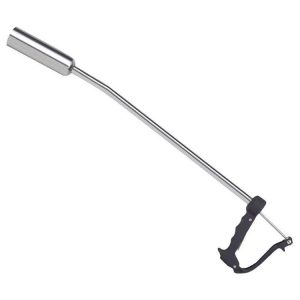
Another important difference is the equipment required. Conventional AI generally uses a standard pig artificial insemination catheter designed for cervical placement. The procedure is familiar to most breeding technicians and is relatively easy to standardize.
Deep insemination requires a catheter designed for deeper placement and greater control during the procedure. Proper handling is important because excessive force or incorrect positioning can cause injury or reduce the effectiveness of the insemination.
For this reason, farms considering deep insemination should focus not only on buying the right pig artificial insemination catheter but also on technician training and reproductive management. Equipment quality and operator technique need to work together.
Which Method Is Better for Your Farm?
There is no single answer for every farm. Conventional artificial insemination remains a practical option for farms that value simplicity, reliable procedures, and easy training. It can provide strong reproductive performance without requiring more specialized techniques.
Deep insemination may be more attractive to farms that are already familiar with artificial insemination and want to explore lower semen doses or improve the use of valuable genetics. However, the method should be introduced as part of a complete breeding program rather than as a simple equipment upgrade.
For commercial pig farms, the most important goal is not choosing the most advanced insemination method. It is choosing a method that can be performed consistently, hygienically, and at the correct time for the sow.
The difference between deep insemination and conventional artificial insemination is mainly about semen placement, semen dose, equipment, and the level of technical control required. Conventional AI is simple and widely established, while deep insemination can improve semen utilization when the right protocol and equipment are used.
Before changing an existing sow breeding system, farms should consider herd size, semen availability, technician experience, reproductive targets, and the cost of equipment. In many cases, the best results come not from one technique alone, but from matching the insemination method to the farm's management system.
For farms evaluating different artificial insemination options, understanding these differences is an important first step toward making better breeding decisions.