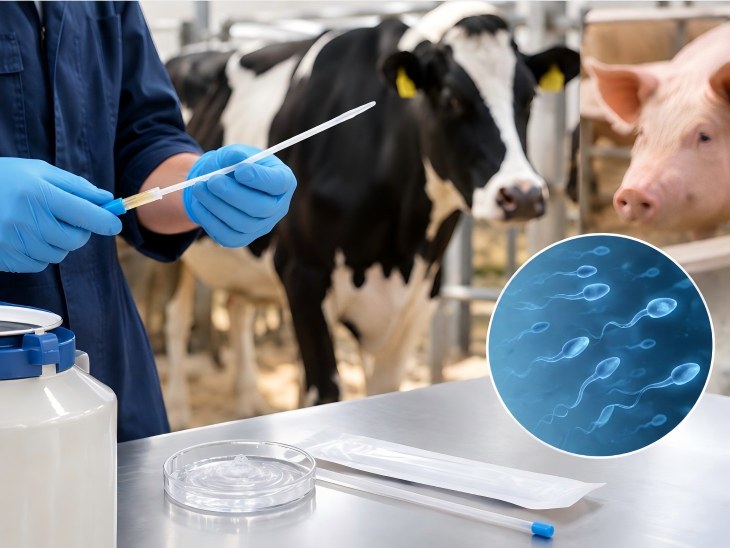
Artificial insemination is widely used in livestock reproduction, including cattle and swine breeding. During the procedure, a small amount of lubricant is often used to help insert an insemination catheter or other reproductive equipment. But can lubricant affect semen quality during artificial insemination?
The short answer is yes, some lubricants may affect sperm function. However, the effect depends on the formulation, concentration, exposure time, animal species, and how the lubricant is used.
This is why a lubricant designed specifically for veterinary reproduction is generally a better choice than using a general-purpose gel without checking its compatibility with semen.
Why Can Lubricant Affect Semen Quality?
Sperm cells are sensitive to their surrounding environment. Factors such as pH, osmolality, temperature and chemical composition can influence sperm motility and cell function.
A lubricant may come into direct or indirect contact with semen during an artificial insemination procedure. If the formulation contains substances that are harmful to sperm, even a product marketed as a lubricant may reduce sperm motility or viability under certain conditions.
Research on animal semen has demonstrated that different lubricants can produce different results. A study evaluating lubricants with bovine, canine and equine sperm found that some products reduced sperm motility at certain concentrations, while others showed little effect under the test conditions.
More recent research in stallion semen also found that the effect of lubricant was related to both the product and the concentration. Some lubricants produced measurable reductions in sperm motility and other sperm-quality indicators, particularly at higher concentrations.
This does not mean that every lubricant will damage semen. It means that the formulation matters.
Non-Spermicidal Does Not Always Mean Completely Risk-Free
When selecting an artificial insemination lubricant, one of the first terms buyers often look for is non-spermicidal.
A non-spermicidal lubricant is not formulated with an ingredient intended to kill sperm. This is an important characteristic for reproductive procedures, but it should not automatically be interpreted as proof that every formulation has no effect on sperm quality.
Studies have shown that some products labeled non-spermicidal can still affect sperm function depending on concentration and exposure conditions.
For this reason, reproductive procedures should use a lubricant specifically intended for veterinary or artificial insemination applications whenever possible.
What Should You Look for in an Artificial Insemination Lubricant?
1. Sperm-safe formulation
The lubricant should be formulated for reproductive procedures and should not contain spermicidal ingredients.Products specifically designed for artificial insemination commonly emphasize sperm compatibility. For example, KRUUSE Insemination Gel is described as non-spermicidal and intended for use with AI catheters and other medical instruments.
2. Appropriate pH and osmolality
Sperm cells function within a relatively sensitive biological environment. A lubricant with an unsuitable pH or osmolality may create additional stress when it comes into contact with semen.The exact requirements can vary between species and applications, so product specifications should be considered together with the manufacturer's intended use.
3. Suitable viscosity
A good veterinary lubricant gel needs enough viscosity to provide smooth lubrication while remaining easy to apply.If the gel is too thin, it may provide insufficient lubrication. If it is excessively thick, applying the correct amount to an AI catheter can become more difficult.The goal is not to use as much lubricant as possible, but to use an appropriate amount for the procedure.
4. Clean handling and appropriate packaging
Contamination is another consideration that is sometimes overlooked.The lubricant itself may be suitable for reproductive use, but contamination can occur when an open container is repeatedly touched by used gloves, instruments or other surfaces.KRUUSE, for example, advises users to avoid contamination and to discard unused product after opening rather than storing it for later use.For larger farms and breeding operations, packaging size and handling procedures should therefore also be considered.
How Much Lubricant Should Be Used?
There is no single amount that applies to every animal or every insemination system.
For catheter-based insemination, the purpose of the gel is to reduce friction and facilitate smooth insertion. It is generally better to apply a suitable, controlled amount rather than covering the catheter with excessive lubricant.
In swine artificial insemination, extension guidance recommends lubricating the tip of the catheter with a nonspermicidal lubricant while taking care to avoid getting lubricant into the catheter opening.
This is an important practical point. The lubricant is intended to assist catheter insertion, not to become part of the semen dose.
Does Lubricant Affect Pig Artificial Insemination?
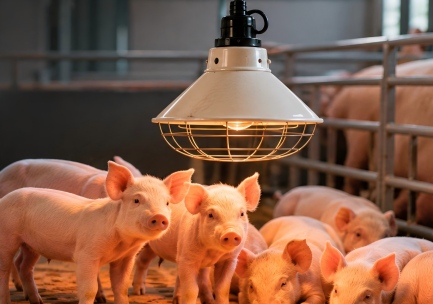
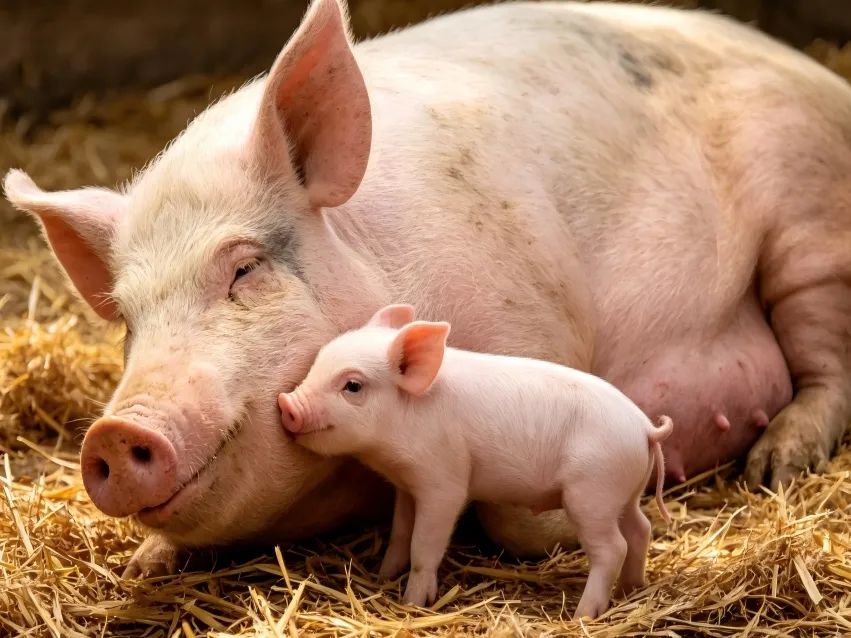
Pig artificial insemination is a good example of why lubricant selection and application technique matter.During sow insemination, the catheter passes through the reproductive tract before the semen is introduced. A small amount of appropriate lubricant can help reduce friction during catheter placement.
However, excessive lubricant or accidental introduction of lubricant into the catheter may increase the chance of unwanted contact with the semen.For farms using conventional or deep insemination catheters, the lubricant should therefore be applied carefully to the outside or appropriate insertion area of the catheter according to the equipment and breeding protocol.
Choosing a Lubricant for Animal Reproduction
When comparing animal insemination gel products, buyers should look beyond the word “lubricant” on the label.
Important points include:
Intended use for veterinary reproduction
Non-spermicidal formulation
Compatibility with artificial insemination procedures
Appropriate viscosity
Suitable pH and formulation
Clean and controlled handling
Packaging suitable for farm or veterinary use
Clear storage and expiration information
It is also worth checking whether the product has been developed specifically for animal reproduction rather than simply adapted from a general-purpose lubricant.
Final Thoughts
So, can lubricant affect semen quality during artificial insemination? Yes. Research has shown that certain lubricants can influence sperm motility and other sperm-quality parameters, particularly when sperm are exposed to higher concentrations or for longer periods.
At the same time, not every lubricant produces the same effect. The formulation, concentration, exposure time and animal species all matter.
For cattle, pigs and other livestock, choosing a sperm-safe veterinary lubricant gel designed for artificial insemination can help reduce unnecessary risks during the procedure. Proper application is equally important: use enough gel to facilitate catheter insertion, but avoid unnecessary contact between lubricant and the semen dose.
For breeding farms, veterinarians and AI technicians, lubricant selection may seem like a small part of the insemination process, but it is one of the details worth getting right.